
Can Octopuses Breathe Air?
How octopus respiration works and what research with Octopus rubescens reveals about air exposure.
Short Answer
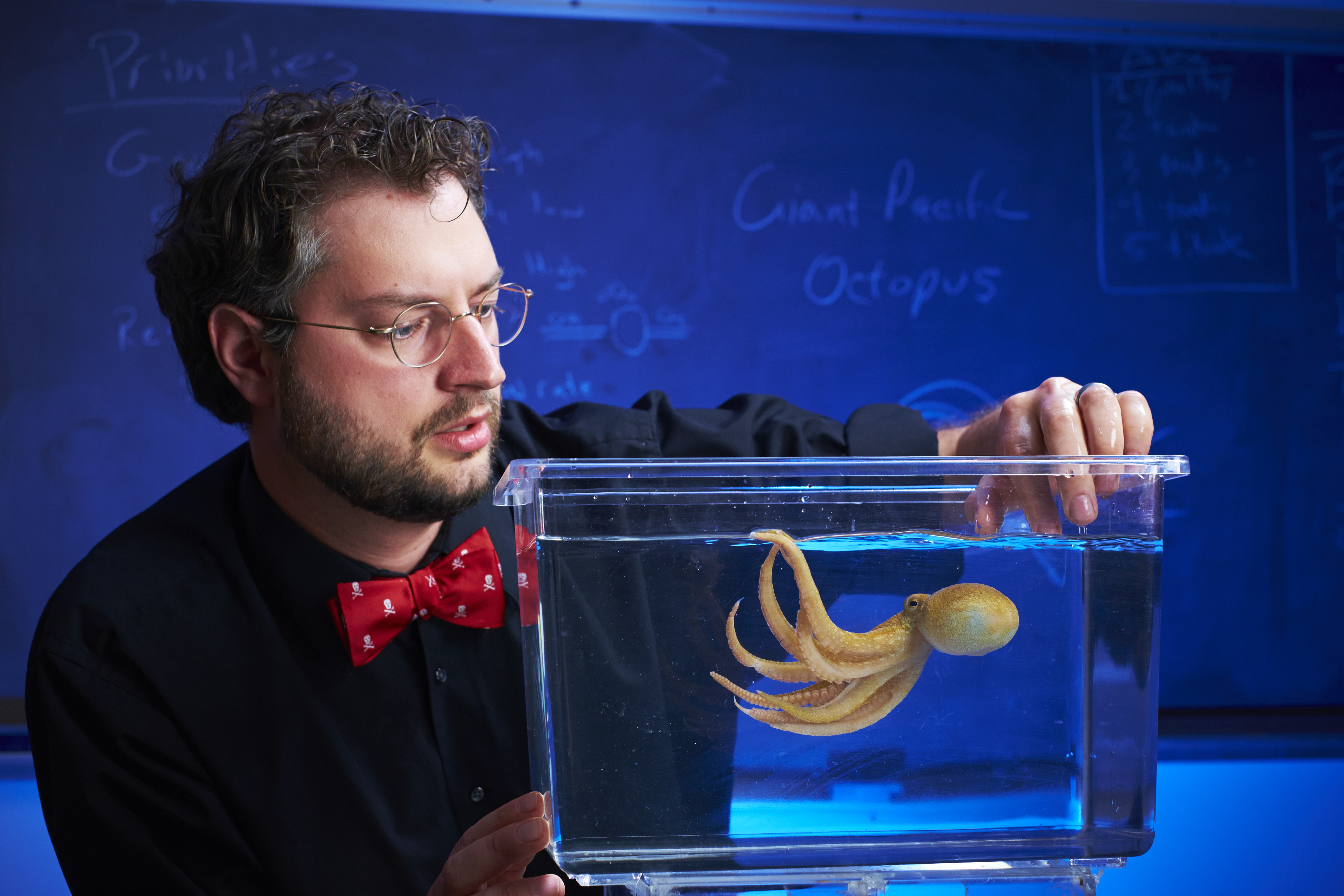
Octopuses can survive short periods out of water, and some species are known to move across wet rocks or between tide pools. However, they do not breathe air the way mammals or air-breathing fishes do. Research from Christopher Reeve’s M.S. thesis in the Onthank Lab found no evidence that Octopus rubescens consumed oxygen from air during short air exposures; instead, the results suggest reliance on anaerobic metabolism while out of water.
How Octopuses Normally Breathe
Like fish, octopuses are aquatic animals that extract dissolved oxygen from water using gills. Water enters the mantle cavity, passes over the gills where oxygen diffuses into the bloodstream, and is then expelled through the siphon. This process is efficient in water, where oxygen is available in dissolved form, but octopus gills are not structured to extract oxygen from air. The gill lamellae, which provide the surface area for gas exchange, collapse and stick together in air, drastically reducing their effectiveness.
Octopus respiration is also tied to their circulatory system. Octopuses have a closed circulatory system with three hearts: two branchial hearts pump blood through the gills, and one systemic heart circulates oxygenated blood to the rest of the body. The respiratory pigment hemocyanin, rather than hemoglobin, carries oxygen in the blood. Hemocyanin is copper-based and less efficient at binding oxygen than hemoglobin, which may also limit how effectively octopuses can extract oxygen from air even if the gills were functional.
Why Do Octopuses Leave the Water?
Despite being entirely aquatic, octopuses sometimes emerge from water. Intertidal species are occasionally exposed during low tide as tide pools recede. There are also well-documented accounts of octopuses moving between tide pools or across damp rocks, and even short overland journeys. These behaviors are typically brief and associated with foraging, escape from predators, or finding new habitat. The octopus’s soft body allows it to survive short periods out of water as long as its skin remains moist, but these excursions are limited by the animal’s inability to breathe air.
What the Onthank Lab Found
Christopher Reeve’s 2016 M.S. thesis, titled “Can Octopuses Breathe Air: Investigation of In-Air Respiration in Octopus rubescens,” directly tested whether the red octopus (Octopus rubescens) can extract oxygen from air.
The study used air-filled respirometers to measure oxygen consumption while octopuses were exposed to air for 15 minutes. To distinguish between oxygen extracted from air and internal metabolic activity, the researchers compared oxygen debt after air exposure to oxygen debt after anoxic (oxygen-free) water exposure. They also measured muscle metabolites associated with anaerobic metabolism.
The study found no evidence that Octopus rubescens consumed oxygen while in air. Instead, the octopuses relied on anaerobic metabolism to meet their energy needs during short air exposures. This suggests that even though octopuses can survive brief periods out of water, they are not actively breathing air and are likely sustaining an oxygen debt that must be repaid once they return to water.
Read Christopher Reeve’s Thesis
How Long Can an Octopus Survive Out of Water?
Survival time out of water varies by species, size, temperature, and humidity. Small intertidal species may survive 20–30 minutes if kept moist, while larger species may tolerate shorter periods. The key limiting factor is not oxygen but moisture loss and the accumulation of metabolic waste. Because octopuses switch to anaerobic metabolism out of water, they build up an oxygen debt and metabolic byproducts that become harmful over time. Once returned to water, they repay this debt through increased respiration.
It is important not to generalize the findings from Octopus rubescens to all octopus species. Different species inhabit different environments, and those that regularly experience air exposure in the intertidal zone may have different physiological tolerances. However, no octopus species is known to have adaptations for true air breathing.
Learn More
- Explore Onthank Lab research on cephalopod physiology and environmental change.
- Visit the SciComm page for more octopus science topics.
- Browse lab publications on octopus respiration, color change, and ocean acidification.